Choosing the right educational setting for preschool-aged children can be a critical decision for parents, leading many to research the best private preschools to find the right fit. One key factor to consider is class size. Small class settings are increasingly recognized for their potential to provide more personalized educational experiences. Delving into the benefits that such settings offer will allow you to make informed decisions when choosing a preschool.
An Individualized Plan
Small class settings allow for individualized attention, which is crucial for little ones in this stage of learning. Teachers in smaller classes can tailor their teaching methods to suit the individual needs of each student, offering help where needed. This personalized attention is particularly valuable in preschool, where foundational cognitive and social skills are developed. According to a study by Soocial, children who attend preschool programs are one-third of a year ahead of their peers, demonstrating the importance of a solid early education foundation.
A Nurturing Environment
Small classes often provide a nurturing and supportive environment that encourages children to communicate and participate more freely. In settings where children feel secure and comfortable, they are more likely to engage in classroom activities, navigate social interactions, and express themselves creatively. This engagement not only enhances their learning experience but also builds their confidence, which is vital as they progress through their educational journey.
A Beneficial Social Setting
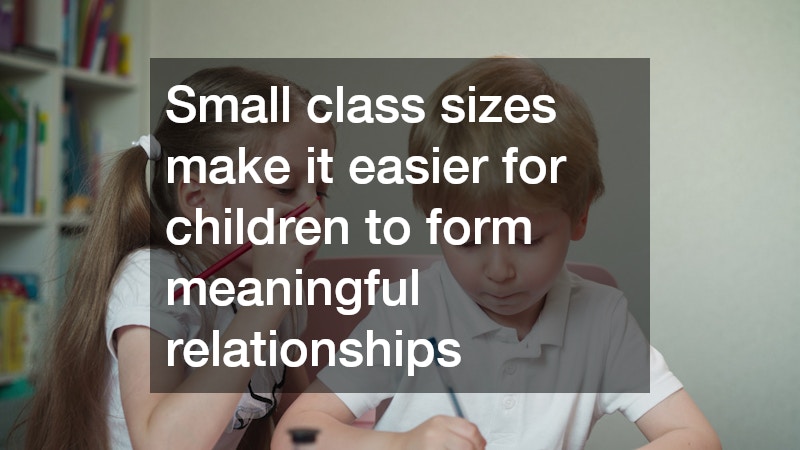
Small class settings are also beneficial for developing critical social skills. Preschool is a time when children start to learn how to share, cooperate, and build friendships. Small class sizes make it easier for children to form meaningful relationships with both their peers and teachers. These relationships can foster a sense of community and belonging, teaching children values of teamwork and empathy from a young age, setting essential groundwork for their future social interactions.
From personalized attention and enhanced engagement to the development of essential social skills, the advantages of smaller class sizes are substantial and are a primary feature of the best private preschools. As parents and educators work to provide the best possible start to a child’s educational journey, understanding the impact of class size can play a pivotal role in making informed decisions. Discover how our small class sizes can benefit your child by reaching out to your local private preschool today.
Choosing the right educational setting for preschool-aged children can be a critical decision for parents, leading many to research the best private preschools to find the right fit. One key factor to consider is class size. Small class settings are increasingly recognized for their potential to provide more personalized educational experiences. Delving into the benefits that such settings offer will allow you to make informed decisions when choosing a preschool.
An Individualized Plan
Small class settings allow for individualized attention, which is crucial for little ones in this stage of learning. Teachers in smaller classes can tailor their teaching methods to suit the individual needs of each student, offering help where needed. This personalized attention is particularly valuable in preschool, where foundational cognitive and social skills are developed. According to a study by Soocial, children who attend preschool programs are one-third of a year ahead of their peers, demonstrating the importance of a solid early education foundation.
A Nurturing Environment
Small classes often provide a nurturing and supportive environment that encourages children to communicate and participate more freely. In settings where children feel secure and comfortable, they are more likely to engage in classroom activities, navigate social interactions, and express themselves creatively. This engagement not only enhances their learning experience but also builds their confidence, which is vital as they progress through their educational journey.
A Beneficial Social Setting
Small class settings are also beneficial for developing critical social skills. Preschool is a time when children start to learn how to share, cooperate, and build friendships. Small class sizes make it easier for children to form meaningful relationships with both their peers and teachers. These relationships can foster a sense of community and belonging, teaching children values of teamwork and empathy from a young age, setting essential groundwork for their future social interactions.
From personalized attention and enhanced engagement to the development of essential social skills, the advantages of smaller class sizes are substantial and are a primary feature of the best private preschools. As parents and educators work to provide the best possible start to a child’s educational journey, understanding the impact of class size can play a pivotal role in making informed decisions. Discover how our small class sizes can benefit your child by reaching out to your local private preschool today.